

When Is It Time For Memory Care? 6 Important Signs
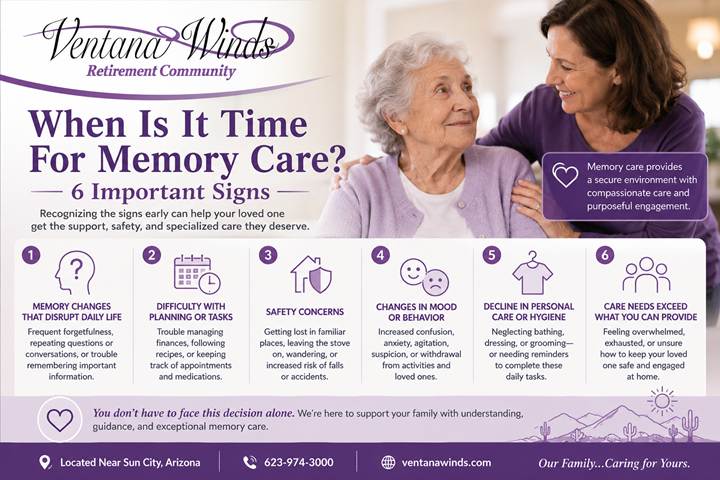
Families rarely receive one unmistakable signal that it is time for memory care. The decision usually develops through a series of changes involving safety, personal care, behavior, health, and the amount of support a person needs each day.
Occasional forgetfulness does not automatically mean someone needs residential memory support. A medical evaluation is important when memory loss or confusion begins affecting daily life. Once a diagnosis has been made, families can watch for practical signs that care at home is becoming difficult or unsafe.
Wandering Or Getting Lost Has Become A Concern
A person living with dementia may leave home unexpectedly, become confused in a familiar neighborhood, or try to return to a place from many years ago. Wandering can happen at different stages of dementia and may place someone at serious risk, particularly during extreme Arizona heat.
Door alarms, identification information, supervision, and changes to the home may help for a time. When a person requires constant monitoring to remain safe, a secured memory care setting may deserve serious consideration.
Everyday Tasks Are No Longer Completed Safely
Look beyond memory lapses and consider how well the person manages ordinary routines. Unopened mail, unpaid bills, spoiled food, missed meals, medication errors, scorched cookware, and poor housekeeping may show that independent living is becoming harder.
Personal hygiene can also change. A loved one may wear the same clothing repeatedly, resist bathing, or forget how to complete familiar tasks. These changes should be discussed with a healthcare professional, since infections, medication effects, depression, and other conditions can sometimes cause sudden confusion.
Behavior Or Personality Has Changed
Dementia can affect judgment, communication, mood, and behavior. A person who was previously relaxed may become suspicious, anxious, withdrawn, or easily agitated. Late afternoon or evening confusion may make care particularly difficult.
Memory care teams are trained to respond to these changes with structure, reassurance, familiar routines, and activities adapted to the resident’s abilities. The goal is not simply to supervise behavior. It is to understand what the person may be communicating through it.
Physical Health Is Declining
Weight loss, dehydration, frequent falls, disrupted sleep, and reduced mobility may suggest that the current care arrangement is no longer meeting every need. A person with dementia may forget to drink, lose interest in food, or have difficulty explaining pain and illness.
Families should seek medical guidance when physical changes appear. If regular meals, hydration, medication support, and daily observation cannot be maintained at home, residential memory care may provide a more consistent routine.
The Family Caregiver Is Exhausted
Caregiver health matters. Constant supervision, interrupted sleep, lifting, personal care, and repeated emergencies can become overwhelming. Exhaustion may affect patience, decision making, work, relationships, and the caregiver’s own health.
Needing additional support is not a failure. It may mean that the level of care has grown beyond what one person or family can safely provide. The National Institute on Aging notes that residential care may become appropriate when an older adult needs more support than relatives and friends can provide.
Home No Longer Provides Enough Engagement
People living with dementia can still benefit from music, conversation, movement, familiar tasks, and meaningful social contact. Isolation may increase when leaving home becomes difficult or a family caregiver has little time left for activities.
A dedicated memory support program can provide a predictable schedule and activities suited to different abilities. Ventana Winds uses its Elements Memory Support program to encourage engagement, individual choice, social connection, and a strength based approach in a secured environment.
Explore Memory Care At Ventana Winds
Ventana Winds provides compassionate memory care in Youngtown near Sun City for people living with Alzheimer’s disease, dementia, and other memory disorders. Families can learn about the Elements Memory Support program, secured accommodations, dining, activities, and current availability by calling Ventana Winds at 623 624 4406 to arrange a personal visit.
References
Ventana Winds Elements Memory Support
National Institute On Aging: Wandering And Getting Lost
National Institute On Aging: Managing Personality And Behavior Changes
National Institute On Aging: Frequently Asked Caregiving Questions