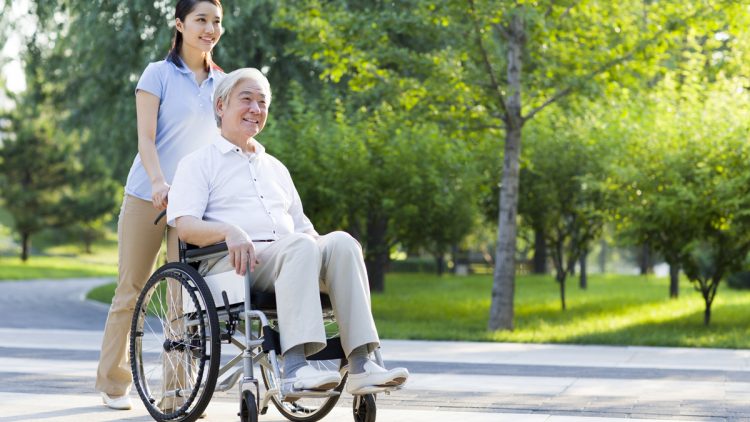
While there is no set industry standard for wheelchair width, most models will range from 21-40″ in overall width. Let’s go over each and every factor that may play a role in figuring out which size wheelchair is best for you.
How Wide Are Wheelchairs?
You are actually the most important thing to measure when it comes to shopping for a wheelchair. After all, you will be sitting in the chair, so deciding what is comfortable for long periods of time is step number one.
It’s recommended to take your own measurements prior to choosing a wheelchair. For instance, measure your hips, then add a few more inches for extra comfort. Once you have taken your measurements, you’ll be equipped to accurately choose the right size chair for your needs.
Wheelchair Size Considerations
How wide a wheelchair is cannot be your only consideration. Always be mindful of the following items.
Seat Depth
Start by measuring the length of your leg from the back of the hip to the back of the knee. Next, subtract one inch from this measurement. This number will indicate the desired seat depth to sit comfortably in your wheelchair.
Door Size
Always consider the size of the doorways in your home before purchasing a wheelchair. Household doorways aren’t always as standardized as you may have guessed. Some doorways measure between 23-27″, which means they are not wide enough for most wheelchairs. Doorways that meet ADA (Americans with Disabilities Act) guidelines will be at least 32″ in width.
Back Height
A properly sized seatback will help you remain comfortable for longer periods of time. Measure your shoulder blades to the base of your spine. This measurement will tell you how high your seatback needs to be.
Armrest Height
To be comfortable in the chair, you should be able to sit straight up with your arms resting at a 90-degree angle. Sitting in this position, measure the distance between the bottom of your arm and your chair. This is the ideal height of your armrests.
Seat To Floor Height
Most big and tall wheelchairs range between 18-22″ in height. You’ll want to purchase a chair that’s at least 18″ off the ground if you are a taller individual. Start by sitting in a regular-sized chair and using that as your guide moving forward.
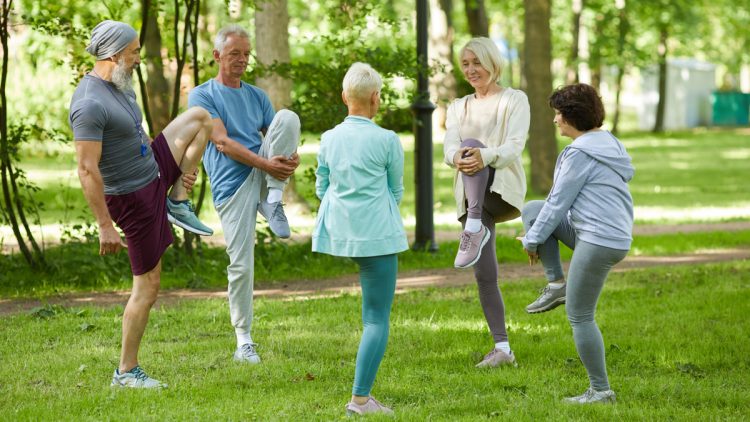
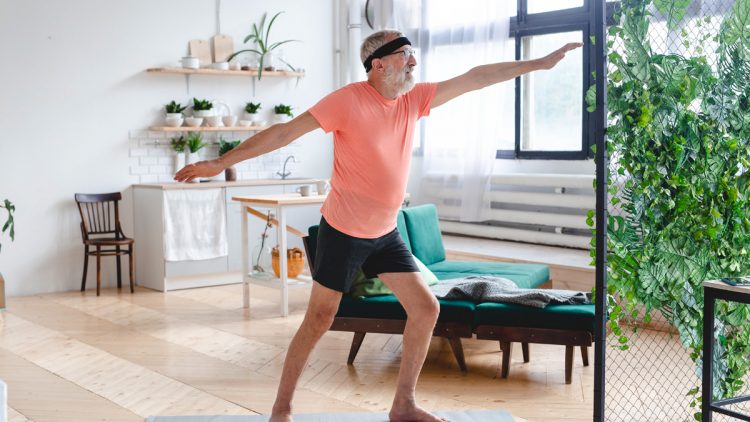
More than 1 in 4 senior citizens fall each year, sometimes resulting in serious injuries. Performing regular fall prevention exercises can reduce accident risks by strengthening key muscles and improving balance.
Best Exercises To Prevent Falls
Always remember safety is paramount with any of these exercises. Have someone nearby at all times if you feel as though you may need some assistance. Try these fall prevention exercises below.
Toe To Heel
Start by holding onto a countertop or sturdy chair back.
Stand with good posture, rising up on your toes with heels in the air.
Lower your feet flat onto the floor.
Rock back on your heels to lift your toes into the air.
Try to repeat this motion 10 times.
One-Leg Balance
Stand in front of a counter or between two chairs of equal height.
Hold on to the supportive surface, bending the knee to raise one foot and balance on one leg.
Bring your foot back down to a resting position then repeat with the other leg.
Try to balance for 10-15 seconds with each leg.
Foot Taps
Stand tall with your feet hip-width apart either in front of a step or low furniture piece.
Raise one foot slowly to tap the step in front of your body.
Now, return this foot to the ground.
Do 15-20 taps with each foot.
Hold onto the wall or a steady furniture piece, if needed.
Head Rotations
Once again stand tall, feet hip-width apart.
Move your head from side to side then up and down all while keeping your body still.
Do this rotation for 30 seconds at a time.
If you start to feel dizzy, you can either pause or stop the motion altogether.
March In Place
Stand with good posture while holding onto a countertop or chair back.
Bring your knees up to your chest as if you are marching in place.
Do this motion slowly and deliberately.
Try to rack up 10 knee raises for each leg.
Side Leg Raise
Stand with good posture while holding onto a countertop or chair back.
Raise one leg out to the side while keeping toes pointed ahead toward the countertop or chair.
Use muscles instead of momentum as you do this slowly and deliberately.
Refrain from dipping your upper body to the opposite side while raising the leg.
Go for 10 repetitions on each side.
Side Twist
Stand between two chairs of equal height.
Place your feet about shoulder-width apart.
Turn, using your upper body and head, then touch the chair on one side.
Turn and touch the chair on the opposite side now.
One-Leg Side Twist
Do the same exercise listed above, but attempt it while balancing on one leg.
Keep hold at all times or have someone nearby ready to help, if needed.
Retirement In Youngtown, Arizona
There isn’t a more appropriately named setting for this lively community than Youngtown! Monthly rent at Ventana Winds includes three well balanced meals plus snacks, 24-hour staff, and a daily tidying of your apartment. The offerings don’t end there! Personal laundry is done weekly, transportation is provided for appointments or shopping, a 24/7 emergency call system is in place, as well as a full slate of exciting activities. Check out all of Ventana Winds’ offerings today!
There isn’t a more appropriately named setting for this lively community than Youngtown! Monthly rent at Ventana Winds includes three well balanced meals plus snacks, 24-hour staff, and a daily tidying of your apartment. The offerings don’t end there! Personal laundry is done weekly, transportation is provided for appointments or shopping, a 24/7 emergency call system is in place, as well as a full slate of exciting activities. Check out all of Ventana Winds’ offerings today!
You are at least 65 years old, unmarried and making less than $14,250.
You are at least 65 years old, married, filing jointly and making less than $26,450.
You are a qualified widow, earning less than $26,450.
The IRS will want individuals to file a tax return whenever your gross income surpasses the total of the standard deduction for your specific filing status, in addition to one exemption amount. The filing rules still apply to seniors who are living off their social security. If you are a senior citizen, though, you don’t consider your social security as your gross income. You will not need to file a tax return if social security is your only source of income.
When Do Seniors Have To File Taxes?
For the current tax year, you must file a tax return if you are 65-plus, unmarried and your gross income is at least $14,250. However, if you live on your social security benefits, you will not need to include this in your gross income, according to TurboTax. You do not need to file if this is your sole source of income, meaning your gross income comes out to zero dollars. If you do earn additional income, that is not tax exempt, then you must figure out whether the total exceeds $14,250.
Whenever you and your spouse are at least 65 years old, married and filing jointly, you have to file a return if your combined income is $27,800 or more. If your spouse is below the age of 65, then the threshold amount decreases to $26,450. These figures were implemented during the 2018 tax year, so make sure to check if the amounts have increased.
When To Include Social Security In Gross Income
Certain situations will call for seniors to add social security benefits in their gross income. If you are married, filing an individual tax return and residing with your spouse, 85% of your social security benefits will be deemed gross income. In this case, you may need to file a tax return. An allotment of social security benefits will be included in your gross income, regardless of status, in any year the total of half your social security, including all other income, tax-exempt interest, exceeding $25,000 or $32,000 as long as you are married and filing jointly.
When Do You Stop Paying Taxes On Social Security?
You are allowed to stop paying taxes on social security at 65 as long as your total income is not a high figure. You can read all about taxes and social security rules right here courtesy of Turbo Tax.
Tax Credits For Seniors
Even if you must file a tax return, there are a few ways to decrease the amount you’ll pay on your taxable income. As long as you are 65-plus years old and your income from alternative sources than social security are not high, then tax credits for seniors can lessen your tax bill. This tax credit is only useful when you owe the IRS.
Ventana Winds In Youngtown, Arizona
We invite you and your loved one to come and tour our memory care facility in Youngtown, Arizona and find out why our residents love to live in our compassionate and welcoming community. Take a look at our memory care page to see pictures, find out more about the facility, amenities, what is included in rent, and more. Call us at (623) 624-4406 for more information or to schedule a tour of our facility.
Local community or sports centers usually provide an assortment of organized exercise and physical activity sessions, like seated exercises, ball games, dance and music, indoor bowls, or indoor/ outdoor swimming. You might be able to use a personalized budget, in a type of a direct payment from your city council for paying for these. Many of the below activities can be altered and carried out at home. Briskly walking, gardening, and housework are also good types of day-to-day physical activity.
Those in the early stages of dementia might experience no new challenges in sports and other physical activities they appreciate. They should be urged to continue these activities when possible.
What is the proper amount of activity in the beginning to middle stages of dementia?
There is no conclusive answer to this question and the proper amount of exercise is going to vary by individual. The Department of Health suggests one hundred and fifty minutes of somewhat strenuous physical activity each week. This equals to thirty minutes of activity each day, for at a minimum of five days a week. This can be broken up into smaller sessions during the day, with each session lasting a least ten minutes. For instance, it might be a brisk fifteen-minute walk to the local thrift store, and then gardening duties or housework later in the day.
Kinds of exercise for those with dementia
Below are some instances of the kinds of exercise that a person may carry out. This is in no way a comprehensive list – any kind of exercise is beneficial.
Gardening
Gardening is a physical activity that offers the chance to get outside and is enjoyed by a lot of individuals. The activity degree can be diverse to fit someone’s abilities. It might be something that requires less effort such as weeding or pruning, or a more laborious activity such as raking or mowing the lawn. These activities can help firm up the body’s muscles and strengthen breathing. Gardening can be a pleasant activity for individuals at every stage of dementia.
Indoor bowling
Some individuals could keep their bowling talents or continue to take part in other ball games, and so might appreciate indoor carpet bowling. Many local recreation centers provide indoor bowling sessions, or sets can be bought at toy or sports outlets.
Dance
Dancing may vary from tea dancing and couple or group meetings to more improvised movement including ribbons, balls, or balloons. Dancing can also be carried out in seated positions. This is a very social activity and an enjoyable way to participate in exercise. Dancing can increase strength and flexibility, assist with staying balanced and nimble, and decreases stress.
Seated exercises
Those suffering dementia can benefit from a routine program of seated exercises at home or with a class at a local course. It is usually wise to see these exercises shown at least once by an instructor or through a video. These exercises are intended at building or fostering muscle strength and balance and are less demanding than exercises in standing positions. They can be part of a growing program, with the number of repetitions of each exercise increasing over time. Some instance of seated exercises can comprise of:
making circles with the arms
raising the arms upwards to the ceiling
marching
practicing moving from sitting to standing.
bicycling the legs
bending the legs
raising opposite arms and legs
clapping under the legs
raising the heels and toes
turning the upper body to and fro
Swimming
Swimming, through supervision, is a perfect activity for those with dementia. A lot of individuals find the sensation of being in the water comforting and calming. Many studies have shown that swimming can improve balance and decrease the risk of falls in the elderly.
Walking
Walking suits all capabilities. It’s totally free, does not require special equipment, and can be done anyplace. The distance and time taking walking can be differed to suit fitness degrees. Some local recreational centers and other organizations plan group walks, assisted by a walk leader, of differing lengths, so it can also be a good social activity.
Aging is an inevitable part of life, but feeling old and looking old can be two separate things. We’ve put together a list of 20 tips to give you a vibrant and younger appearance, even at age 60 and beyond.
Tip 1. Exercise More
More exercise will improve your blood circulation, increase supply of collagen, and of course, eventually lead to weight lose.
Tip 2. Drink Less
We all know drinking can have some terrible effects on the body. Alcohol has been proven to accelerate the aging process in one’s eyes and face.
Tip 3. Relax More
A lot of stress will make you age much quicker, unfortunately. Relax by doing yoga, talking long walks or whatever you can do to be at peace.
Tip 4. Color Your Hair
For many, finding a few gray hairs may be the first sign of aging. Finding a licensed hair stylist to properly color your hair is the best way to ensure long-lasting results. Box color uses cheaper chemicals that can wear off and make the coloring look unrealistic.
Tip 5. Stop Smoking
This is a crucial step towards your long-term health and your efforts to look younger. Cigarettes, like alcohol, will add age to your face. Try e-cigarettes or nicotine gum if you are attempting to quit for the first time.
Tip 6. Less Sugar Intake
Sugar is an inflammatory food that can show signs of aging on your face. Sugar can also inflame your brain, making it harder to concentrate. Transition from consuming lots of sugar to some sweet fruits.
Tip 7. Always Use Sunscreen
More people need to start applying sunscreen at an earlier age. Using a sunscreen with a high SPF will help avoid redness or sunspots.
Tip 8. Moisturize Your Skin
Dry skin will appear old and cracked. Not using any sort of moisturizer will only highlight the problem areas.
Tip 9. Frame Your Face
Eyebrows actually play a huge role in making your face appear younger. Keeping your eyebrows trimmed and shaped will help frame your face, ultimately drawing attention to your eyes.
Tip 10. Drink More Water
This tip goes hand in hand with moisturizing. Drinking plenty of water daily will help your skin stay moisturized, naturally.
Tip 11. V-Neck Shirts
By simply wearing more V-neck shirts, your neckline will look more youthful and flattering.
Tip 12. Whiten Teeth
This is a popular action for seniors trying to look younger. Whiter teeth gives the impression that you are younger than you actually are. Purchase some of the many teeth-whitening products to remove any stains.
Tip 13. Eat More Grapes
Sorbitol gives grapes a sweetness and it is also a substance that attracts water when applied to the skin. Eating grapes will ultimately help your skin absorb and retain moisture.
Tip 14. Smile More
This simple step helps mentally and physically. There is no doubt people who smile appear younger and happier. Smiling more often will decrease the chances of wrinkles developing.
Tip 15. More Hobbies
Spend your time and money on the things you love doing. Whether it’s a golf course membership or vacations, do what makes you happiest.
Tip 16. Undergarments
Undergarments that don’t fit or fit awkwardly can give you an invisible waistline.
Tip 17. Tight Fitting Clothes
Choose to wear clothes that fit a bit tighter than you are accustomed to. The tighter fits tend to make one appear younger.
Tip 18. Build Strong Social Relationships
Forming strong social relationships is helpful for both the physical and mental health of seniors. Good friends can help to boost your energy and overall mood.
Tip 19. Facial Massages
Facial massages will increase blood flow to the face, providing more nutrients and oxygen for tissues. Daily massages of the jawline can keep its elasticity.
Tip 20. Lose Weight
If you apply all these tips to look and feel younger, the weight loss should come naturally.
What should you know about the great state of Arizona before moving there? Let’s take a look at 15 things that make the valley so unique.
1. Low Cost Of Living
Of course, there are some expensive places to live in the valley, including Scottsdale and Fountain Hills, but there are several very affordable places to call home in this state. The cost of living in the Phoenix area is actually 5% lower than the national average, according to PayScale. Rent is also affordable in other neighboring cities like Tucson and Tempe. The average income in Arizona is $59,000, currently.
2. Some Like It Hot
If you don’t mind the hot and dry summers, then you will love Arizona’s weather overall. Typically, the climate is dry and sunny throughout the year, with the winters and springs offering mild temperatures. From October to April, Arizona is a paradise for those looking for outdoor activities. The state in general sees a large influx of tourists during these months. Monsoon season is June through August, bringing some much-needed rainfall to the valley.
3. More Than Just A Desert
There is far more to this state than its desert landscape. Mountain ranges are always within eyesight, with colorful cacti surrounding urban areas. With 433 cities in Arizona, residents will find a variety of canyons, lakes, forests and skyscrapers.
4. Monsoons And Haboobs
Every area experiences inclement weather, and the valley is no exception. June to September is Arizona’s monsoon season, where residents will experience strong winds and rainstorms. Haboobs, which are large dust storms, generally follow in the monsoon’s footsteps.
5. Growing Population
The affordable cost of living combined with a booming job market have made Arizona a premier place to live. Phoenix is listed as the 5th-largest city in the country. Scottsdale, Paradise Valley and Sedona continue to grow due to many retirees settling in these areas.
6. It Does Snow In Arizona
The northern half of this state will experience some snowfall during wintertime. Areas like Phoenix and Tucson will remain warm year-round, but cities like Flagstaff and Sedona can become winter wonderlands.
7. Great For Sports Fans
Known as a golfer’s paradise, the valley offers many world-class resorts and destinations. From Sedona to Tucson, retirees’ can enjoy their favorite hobby in style. The PGA’s Waste Management Phoenix Open is played annually in Scottsdale, as well. There’s more than just golf in Arizona, though! Residents also enjoy watching teams in all four major sports, including the Diamondbacks (MLB), Cardinals (NFL), Suns (NBA) and Coyotes (NHL).
8. The Wild West
Long before Arizona was even a state, it was home to some of the world’s most infamous outlaws. Many historic gunfights and showdowns occurred in the valley, as well. Many of these old western towns remain preserved, which makes for some great day-trips.
9. Diverse Food And Drink
Have you ever tried a Sonoran dog or cactus jelly? Well, if you move to Arizona you will have try some of their diverse food and drink offerings. Try a Sonoran dog and wash it down with the desert-inspired prickly pear margarita.
10. The Grand Canyon State
The world’s greatest wonder, otherwise known as the Grand Canyon, is located in Arizona. Residents can enjoy breathtaking views of the mile-deep gorge that spans 277 miles.
11. Booming Job Market
The higher cost of living in some of the most desirable spots in the state can be offset by an abundance of job opportunities. Arizona features a growing tech industry, with Apple, Uber and Lyft recently setting up offices in the valley. Small and large companies continue to flock to Arizona for its affordability and innovation.
12. Most Sun In The U.S.
The state of Arizona gets 299 sunny days per year, which is the most in the entire country. Even the sunshine state of Florida does not receive as much sun as Arizona. Get a healthy dose of vitamin D when you move to the valley of the sun.
13. Tourist Season
Many people, especially retirees, desire a place like Arizona because it seems very isolated and secluded. This is certainly not the case during the cooler months. This time of the year will bring a lot of tourists to the area. Known as “snowbirds”, these tourists will cause an increase in traffic from October to April.
14. Fewer Tax Burdens
Arizona offers less tax burdens for residents compared to other states. Allowing residents to keep as much of their income as possible has helped the valley grow exponentially for several decades.
15. Beautiful Scenery
Arizona offers much more than gorgeous sunrises and sunsets. The valley of the sun is home to some of the best scenic hiking trails in the world. Sedona is home to the famous red rocks, plus mountain ranges, lakes and desert beauty can be seen all over the state.
From in-home care to assisted living, these are the most common care levels for the elderly today.
What Are The Levels Of Care For The Elderly?
There are six common levels of care for the elderly, including:
In-Home Care
Independent Living
Assisted Living
Respite Care
Memory Care
Nursing Home
Let’s take a look at what care options each level can provide!
In-Home Care
This type of care is designed for seniors who can still live on their own, yet would benefit from some help around the house. Individuals utilizing in-home care usually seek daily check-ins and assistance with any medication or personal needs. These senior citizens will still possess the necessary physical and mental capabilities to survive on their own.
The benefits of in-home care are obvious, as much-needed assistance is provided in a comfortable environment. Typically, in-home care services will not last a long time. Most of the seniors will soon need to transition into independent or assisted living communities.
Independent Living
Independent living in contrast to assisted living is that individuals that still have the ability to live independently will still be able to enjoy being able to access assistance should they need too. Whereas, a lifestyle at an independent living community provides their residents the convenience of accessing medical care, entertainment, a dining area that serves great meals, and so much more…
Seniors can also have peace of mind knowing they will be living an independent lifestyle in a community that offers their residents a safe and secure environment, it will just have a minimal amount of assistance offered. Typically available, housekeeping, laundry, meals, and hospitality may not be included as part of the monthly rental charges.
Assisted Living
An assisted living facility is one in which its residents largely lead their lives independently. They do get a little assistance for needs that differ from person to person, possibly with mobility, meal planning, transportation, hygiene or medication. You might be ready for assisted living if it is becoming hard or dangerous for you to go up and down the stairs at home or if driving is starting to get risky.
Assisted living can be in a residential-type neighborhood or large building. Some facilities allow pets and can also consist of laundry as part of the rent or for an extra fee.
Respite Care
Many seniors are a bit apprehensive about transitioning into either independent or assisted living care. This is where respite care comes into play. Respite care is seen as the middle ground between living at home and entering a new care community.
Respite care is designed for seniors in flux regarding a future living situation. This type of care can last anywhere from one month to one year.
Memory Care
Memory care communities will differ considerably from assisted living communities. The residents in memory care communities have serious memory-related and specific requirements. They might not remember who they are on some days and may get angered walking around spaces that they have lived in but now feel unfamiliar with.
Individuals in memory care units may tend to wander off the campus and can present a danger to themselves and to others, particularly if they get aggressive when they are frustrated.
Nursing Home
For seniors today, nursing home care represents the most concentrated living situation. More than any other senior living community, though, nursing homes provide the most invasive caregiving. Any senior who needs constant supervision or hospital trips, should choose nursing home care.
For the tax year 2021, you may stop filing taxes at age 65 if:
You are at least 65 years old, unmarried and making less than $14,250.
You are at least 65 years old, married, filing jointly and making less than $26,450.
You are a qualified widow, earning less than $26,450.
The IRS will want individuals to file a tax return whenever your gross income surpasses the total of the standard deduction for your specific filing status, in addition to one exemption amount. The filing rules still apply to seniors who are living off their social security. If you are a senior citizen, though, you don’t consider your social security as your gross income. You will not need to file a tax return if social security is your only source of income.
When Do Seniors Have To File Taxes?
For the current tax year, you must file a tax return if you are 65-plus, unmarried and your gross income is at least $14,250. However, if you live on your social security benefits, you will not need to include this in your gross income, according to TurboTax. You do not need to file if this is your sole source of income, meaning your gross income comes out to zero dollars. If you do earn additional income, that is not tax exempt, then you must figure out whether the total exceeds $14,250.
Whenever you and your spouse are at least 65 years old, married and filing jointly, you have to file a return if your combined income is $27,800 or more. If your spouse is below the age of 65, then the threshold amount decreases to $26,450. These figures were implemented during the 2018 tax year, so make sure to check if the amounts have increased.
When To Include Social Security In Gross Income
Certain situations will call for seniors to add social security benefits in their gross income. If you are married, filing an individual tax return and residing with your spouse, 85% of your social security benefits will be deemed gross income. In this case, you may need to file a tax return. An allotment of social security benefits will be included in your gross income, regardless of status, in any year the total of half your social security, including all other income, tax-exempt interest, exceeding $25,000 or $32,000 as long as you are married and filing jointly.
When Do You Stop Paying Taxes On Social Security?
You are allowed to stop paying taxes on social security at 65 as long as your total income is not a high figure. You can read all about taxes and social security rules right here courtesy of Turbo Tax.
Tax Credits For Seniors
Even if you must file a tax return, there are a few ways to decrease the amount you’ll pay on your taxable income. As long as you are 65-plus years old and your income from alternative sources than social security are not high, then tax credits for seniors can lessen your tax bill. This tax credit is only useful when you owe the IRS.
Ventana Winds In Youngtown, Arizona
We invite you and your loved one to come and tour our memory care facility in Youngtown, Arizona and find out why our residents love to live in our compassionate and welcoming community. Take a look at our memory care page to see pictures, find out more about the facility, amenities, what is included in rent, and more. Call us at (623) 624-4406 for more information or to schedule a tour of our facility.
The average cost of memory care is $5,655 a month with costs ranging from $1,595 to $9,715 in Youngtown, Arizona in 2022.
The average costs for memory care ranges from $1,595 – $9,715+ a month. Prices shift dependent on location, services, and elderly care needs. While many services such as meals, medication handling, and group activities will be included, others will not. I.e., residents could have access to clothe washing services, lunch trips, or beauty amenities, like hair-cuts or pedicures, but those could cost extra.
When a senior is suffering with Alzheimer’s of Huntington’s disease, keeping them safe and well takes precedence that could be mentally and emotionally draining on their loved ones. Concerning demeanors that can be hard to safely control, such as roaming and aggressiveness, begin to emerge. For family care takers, like spouses and adult children, fulfilling their loved one’s complicating — and changing — requirements can be a major struggle.
The following are some ways to pay for memory care:
Medicare
Medicaid
Life Insurance
Long-Term Care Insurance
Reverse Mortgages
Memory Care At Ventana Winds In Youngtown, Arizona
We invite you and your loved one to come and tour our memory care facility in Youngtown, Arizona and find out why our residents love to live in our compassionate and welcoming community. Take a look at our memory care page to see pictures, find out more about the facility, amenities, what is included in rent, and more. Call us at (623) 624-4406 for more information or to schedule a tour of our facility.