
Memory Care For Wandering Near Sun City: What Families Should Know
Written by webtechs

Memory Care For Wandering Near Sun City: What Families Should Know

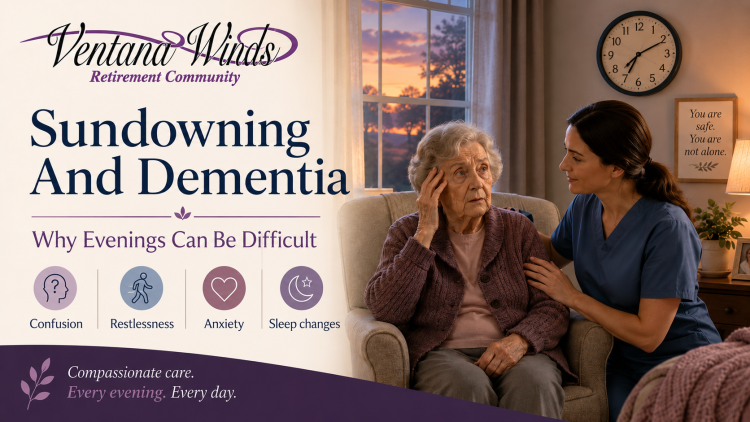
The front door alarm goes off at 2:15 in the morning. Mom is standing outside in slippers, certain she needs to go home, even though she has lived in the same house for twenty years. By breakfast, she may not remember it happened. Her daughter certainly does.

Wandering is one of the moments that changes the family conversation around dementia care.

Why Wandering Feels So Frightening In Arizona

Memory loss is difficult anywhere, but the Sun City and Youngtown area brings an extra worry. Heat. A person living with dementia may leave the house without water, a phone, proper shoes, or a clear sense of direction. In summer, even a short time outside can become dangerous.

Families often try to manage it at home first. They add locks. They move keys. They sleep lightly. A neighbor is asked to call if Dad appears near the driveway. Everyone means well, but the stress builds. The person with dementia is not being difficult on purpose. They may be looking for work, a childhood home, a spouse, or simply responding to restlessness and confusion.

That is why wandering should not be treated as a one time scare. It is a sign that the care environment may need to change.

What Secure Memory Care Should Provide

Good memory care is not only about locked doors. Safety matters, of course, but the better question is what happens all day before someone becomes anxious enough to leave.

A memory care community should offer routine, trained caregivers, secure indoor and outdoor areas, personal care help, meals, activities, supervision, and a setting that reduces confusion. Residents need structure, but they also need warmth. They need people who understand that dementia can affect speech, mood, sleep, appetite, judgment, and the ability to ask for help.

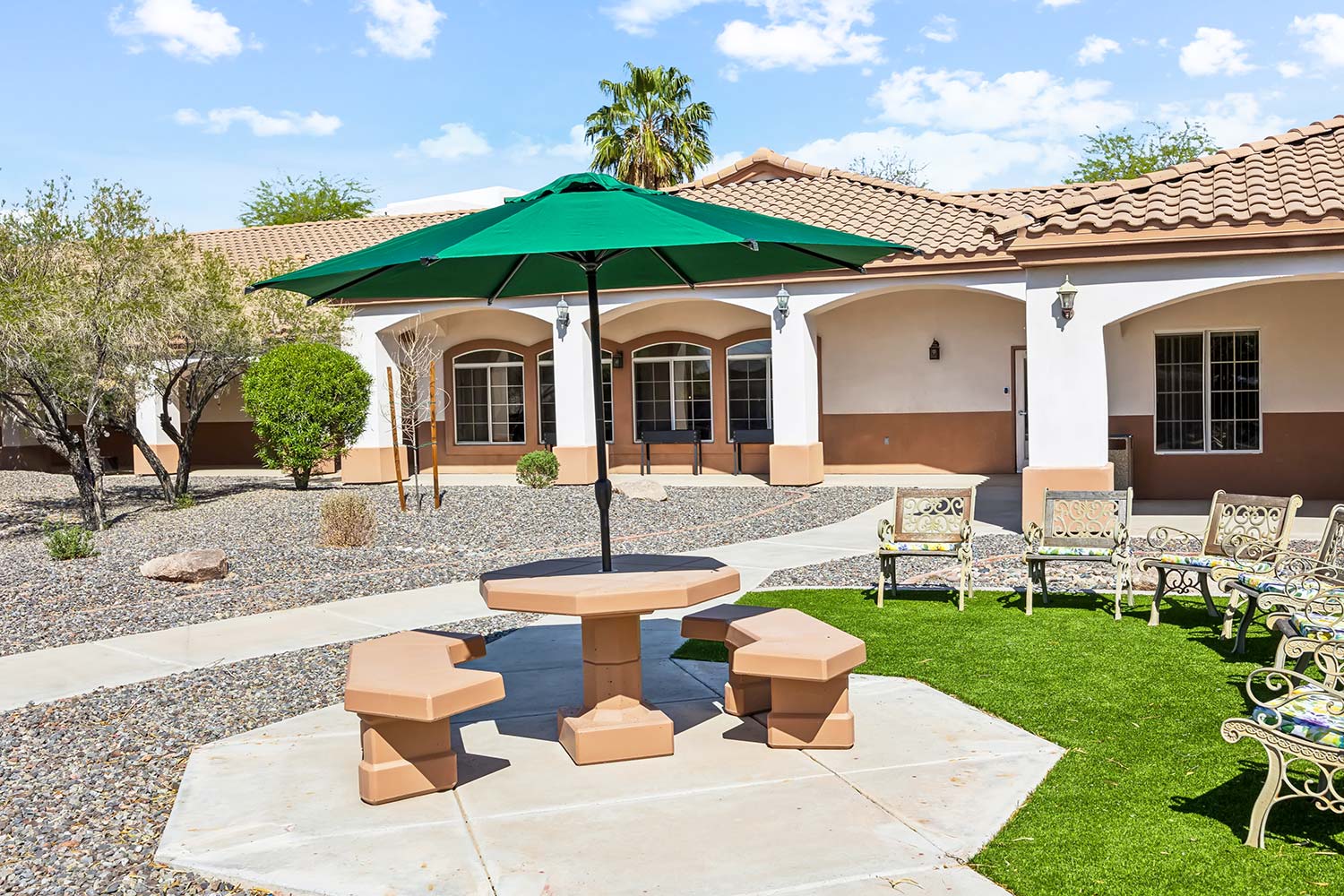
Ventana Winds Memory Care is located in Youngtown, close to Sun City, with a program designed for residents experiencing memory loss. The community describes trained caregivers, stimulating daily activities, a nurturing environment, and a secure setting for residents who need more supervision.

For families, those details matter. A parent who wanders may still enjoy music, conversation, simple games, meals with others, gentle movement, and familiar routines. Memory care should protect that quality of life, not just prevent accidents.

When To Start The Conversation

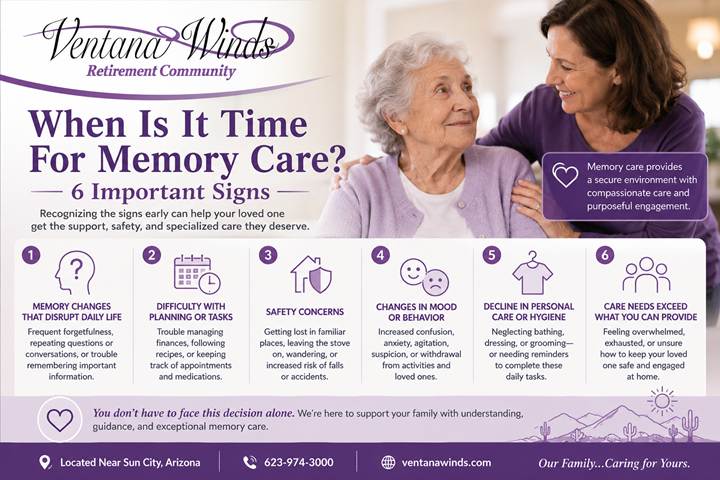
The best time to ask about memory care is before the family is exhausted. Start after the first serious wandering incident, repeated nighttime confusion, unsafe cooking, missed medications, or growing caregiver stress.

It can help to tour without making promises. Ask how staff respond to exit seeking. Ask about assessments, care plans, activities, meals, bathing help, nighttime supervision, and family communication. Notice whether the community feels patient and steady.

If your loved one has started wandering or trying to leave home unexpectedly, call Ventana Winds in Youngtown to discuss memory care near Sun City. A safer setting can give your loved one support while giving the family something it may not have had in a while: sleep, perspective, and peace of mind.

References:

https://www.ventanawinds.com/memory.htm

https://www.ventanawinds.com/memory/care-sun-city.htm

https://www.ventanawinds.com/elements-memory-support.htm

https://www.alz.org/help-support/caregiving/stages-behaviors/wandering

About Ventana Winds

Ventana Winds Retirement Community is a member of SLS Communities and offers Assisted Living and Memory Care services In Youngtown, Arizona.

More Articles About Senior Living

Written by webtechs

Why Summer Is Often The Right Time To Tour Assisted Living Near Sun City

Why Summer Is Often The Right Time To Tour Assisted Living Near Sun City

Dad says he is fine, but the house tells a slightly different story. The blinds stay closed all day. The refrigerator is thin on real meals. Errands are being pushed off because the car is too hot to get into by noon. In the West Valley, summer has a way of showing families what winter can politely hide.

That does not mean every senior needs assisted living right away. It does mean June is a sensible time to look around, ask questions, and compare options before a rushed decision becomes necessary.

Arizona Heat Can Change The Daily Routine Fast

Sun City, Youngtown, Peoria, Glendale, and Surprise are full of active seniors who value independence. Many have managed their own homes for years. The problem is that summer adds extra friction to ordinary tasks.

A quick grocery trip feels harder. Yard work becomes unsafe. Walking across a parking lot takes more planning. Even cooking can feel like a chore when the house is already warm and energy is low.

Families often notice smaller changes first. Missed meals. Less laundry getting done. More sitting in the same chair. Fewer social plans. A parent who used to drive anywhere may suddenly avoid appointments unless someone else can help.

Assisted living is not about taking over a person’s life. At its best, it gives support where support is needed, while preserving choice, comfort, privacy, and routine.

What To Look For During A Summer Tour

A good assisted living tour should feel practical, not just polished. Ask about meals, hydration, transportation, activities, apartment layouts, housekeeping, laundry, emergency call systems, and how staff handle changes in a resident’s needs.

Also look at the building like a family member, not like a shopper. Can your parent get from the apartment to dining without feeling overwhelmed? Are there comfortable places to sit? Does the community feel calm, warm, and lived in? Are residents engaged, or does the place feel quiet in the wrong way?

Ventana Winds is located in Youngtown near Sun City and offers assisted living apartments with features such as walk in closets, extra storage, private patios or balconies, kitchenettes, and restaurant style dining. For many families, that apartment style matters. It helps the move feel less like giving something up and more like choosing a safer, easier daily rhythm.

A Tour Does Not Force A Decision

One of the best reasons to tour in June is simple. You are not yet in crisis. You can walk the community, meet staff, ask about availability, talk through care needs, and let your parent picture the setting.

That is much better than making calls after a fall, a hospital visit, or a long stretch of unsafe summer isolation.

If your family is beginning to wonder whether assisted living near Sun City or Youngtown might be the next good step, call Ventana Winds to schedule a tour. Seeing the community in person can make the conversation calmer, clearer, and far less intimidating.

References:

https://www.ventanawinds.com/

https://www.ventanawinds.com/assisted-living.htm

https://www.ventanawinds.com/contact.htm

https://www.nia.nih.gov/health/assisted-living-and-nursing-homes/long-term-care-facilities-assisted-living-nursing-homes

https://www.cdc.gov/extreme-heat/risk-factors/index.html

Assisted Living In Sun City & Youngtown, Arizona

Searching for Assisted Living In Sun City or Assisted Living In Youngtown, Arizona? Ventana Winds Retirement Community can help! We offer the highest standard of assisted living services in the Phoenix Metropolitan Area. Call us today at (623) 624-4406 for more information or to schedule a tour.

Is Memory Care Always Associated With Alzheimers or Dementia
Written by webtechs

Is Memory Care Always Associated With Alzheimers or Dementia?

When families first hear the term memory care, they often assume it means one thing only: Alzheimer’s disease. That makes sense, because Alzheimer’s is the best known cause of memory loss in older adults and the form of dementia most people have heard of. But memory care is not limited to Alzheimer’s alone. In reality, memory care is designed for people living with Alzheimer’s, dementia, or other serious memory-related conditions that affect daily life, safety, and overall well-being.

In other words, memory care is usually connected to cognitive decline, but it is not always tied to one single diagnosis.

MEMORY CARE IS ABOUT THE LEVEL OF SUPPORT NEEDED

This is where many families get confused. Someone does not move into memory care simply because a doctor has used one particular word. What usually matters more is whether memory problems, confusion, poor judgment, wandering, or changes in behavior have reached a point where living at home or even standard assisted living is no longer enough.

That is an important distinction. Dementia itself is not one disease. It is a broad term used for symptoms that affect memory, reasoning, communication, and everyday functioning. Alzheimer’s is the most common cause, but it is only one part of the larger picture.

ALZHEIMER’S IS COMMON, BUT NOT THE ONLY REASON

A person may need memory care because of Alzheimer’s disease, but they may also need it because of another type of dementia or another condition that creates similar cognitive and behavioral challenges. Some residents have vascular dementia. Others may have Lewy body dementia or another memory disorder that makes daily routines harder and creates safety concerns.

There are also situations where a family knows something is clearly wrong long before they have a perfectly neat diagnosis. A loved one may be increasingly disoriented, forget to eat, wander, become anxious, or struggle with normal tasks. In those cases, the need for memory care may become obvious even while the medical picture is still being sorted out.

WHAT MEMORY CARE REALLY PROVIDES

Memory care is best understood as a specialized setting for people who need more structure, supervision, and support than other senior living arrangements usually provide. These communities are set up to help residents with daily routines, meals, medication support, engagement, safety, and a more predictable environment.

That is why the question is not always, “Does this person have Alzheimer’s?” Sometimes the better question is, “Are memory problems now affecting safety and quality of life enough that specialized care would help?”

That shift in thinking can make the whole topic much easier for families to understand.

WHEN FAMILIES SHOULD LOOK MORE CLOSELY

If a loved one is becoming more confused, more isolated, less safe at home, or more dependent on others for basic daily tasks, it may be time to look at memory care more seriously. The decision is rarely about labels alone. It is usually about what kind of setting will give that person the best chance of stability, dignity, and support.

For many families, that realization brings both sadness and relief. It is a hard step, but it can also be the step that creates more peace for everyone involved.

CALL TO ACTION

If you are trying to understand whether memory care is the right fit for someone you love, Ventana Winds can help you explore the options in a clear and compassionate way. Reach out to learn more about their memory care services, trained team, and supportive environment for seniors living with memory challenges.

REFERENCES

Ventana Winds Home

Ventana Winds What Is Memory Care?

Ventana Winds Memory Care Sun City AZ

Ventana Winds Memory Care Facilities Near Me

Alzheimer’s Association What Is Dementia

Alzheimer’s Association Memory Loss Concerns

National Institute on Aging Alzheimer’s and Dementia

National Institute on Aging What Is Dementia?

National Institute on Aging Memory Problems, Forgetfulness, and Aging

About Ventana Winds

Ventana Winds Retirement Community is a member of SLS Communities and offers Assisted Living and Memory Care services In Youngtown, Arizona.

More Articles About Senior Living

Preperations Before Entering A Memory Care Facility
Written by webtechs

Preperations Before Entering A Memory Care Facility

aking the move into memory care is rarely just a practical decision. For most families, it is emotional, tiring, and full of second guessing, even when they know it is the right time. There is often a mix of relief, worry, sadness, and guilt all happening at once. That is normal. A move like this touches every part of family life.

What helps most is not trying to make the process perfect. It is making it calmer, clearer, and less overwhelming. A little preparation can take some of the fear out of the experience and help your loved one arrive feeling more settled and supported.

GET THE IMPORTANT PAPERWORK TOGETHER EARLY

One of the easiest ways to reduce stress is to gather the key documents before move in day gets close. That usually means medication lists, doctor contact information, insurance details, identification, emergency contacts, and any legal paperwork the community may need, such as healthcare directives or power of attorney documents.

Doing this early matters because the final week before a move can feel surprisingly hectic. Families are often juggling calls, emotions, packing, and scheduling all at the same time. When the paperwork is already handled, it frees up energy for the more personal side of the transition.

BRING THINGS THAT FEEL LIKE HOME

This may be the most important part. A room in memory care should not feel like a blank space someone has simply been placed into. Even a few familiar items can make a real difference. Family photographs, a favorite blanket, a well used chair, a lamp from home, familiar books, or a treasured quilt can help soften the shock of a new environment.

Clothing matters too. Comfortable clothes that are easy to put on and easy to wash are usually the best choice. Labeling personal items may feel like a small thing, but it can save a great deal of confusion later. The goal is comfort, familiarity, and a sense that this new place is not entirely unknown.

PREPARE FOR THE EMOTIONAL WEIGHT OF THE MOVE

Families often spend so much time planning the logistics that they forget how emotional the move can be. Your loved one may feel anxious, confused, resistant, quiet, or unexpectedly calm. Family members may feel as though they are doing something wrong, even when they are acting out of love and necessity.

Try to keep conversations gentle and steady. Reassurance usually helps more than long explanations. What your loved one often needs most is a calm voice, familiar faces, and the feeling that they are safe. That tone can shape the entire move more than any perfectly packed suitcase.

LEARN THE COMMUNITY BEFORE MOVE IN DAY

It helps a great deal when families know what daily life will actually look like. Ask about meals, routines, activities, visiting hours, communication with staff, and how the team helps new residents settle in. The more you understand the rhythm of the community, the easier it is to explain it in a comforting way.

A good memory care community should feel structured, safe, and warm, not cold or confusing. When families know what to expect, they tend to feel more confident, and that confidence often helps the resident too.

GIVE THE ADJUSTMENT TIME

The first few days and weeks may feel uneven. That does not always mean something is wrong. Transitions take time. New surroundings, new faces, and new routines can be tiring at first. Staying in contact with staff and giving the process some breathing room usually helps far more than expecting instant comfort.

CALL TO ACTION

If your family is starting to consider memory care, Ventana Winds offers a supportive environment designed for comfort, safety, and dignity. Reach out to learn more about the community, the care team, and what the move in process looks like for new residents and their families.

REFERENCES

Ventana Winds Home

Ventana Winds Memory Care

Ventana Winds Memory Care Sun City AZ

Alzheimer’s Association Long-Term Care

National Institute on Aging Advance Care Planning

National Institute on Aging Finding Long-Term Care

About Ventana Winds

Ventana Winds Retirement Community is a member of SLS Communities and offers Assisted Living and Memory Care services In Youngtown, Arizona.

More Articles About Senior Living

Pros And Cons Of Living In Retirement In Arizona
Written by webtechs

Pros And Cons Of Living In Retirement In Arizona

Arizona has been on the radar for retirees for a long time, and it is not hard to see why. The weather alone pulls a lot of people in, and once you add in the lifestyle and variety of communities, it starts to make real sense. That said, it is not automatically the right fit for everyone.

If you are thinking about making a move in 2026, it helps to look at what life there is actually like day to day, not just the highlights.

THE WEATHER IS A BIG PLUS, UNTIL IT IS NOT

Let’s start with the obvious one. Arizona gets a lot of sunshine. For many retirees, that is a huge upgrade from gray winters and cold temperatures. Being able to step outside in January and enjoy a walk or a round of golf is a big deal.

But there is another side to it. Summers can be extremely hot, especially in areas like Phoenix. We are talking about stretches where going outside in the middle of the day just is not appealing.

Some people adjust and plan their routines around it. Others find it a bit much after a while. It really depends on your tolerance for heat.

COST OF LIVING, MOSTLY REASONABLE

Arizona is often seen as more affordable than places like California or parts of the East Coast, and in many cases, that is still true. Housing can be more attainable, and property taxes are generally lower than in a lot of other states.

That said, not every part of Arizona is inexpensive. Certain areas, especially those with well-known retirement communities, can come with higher home prices or added fees.

There is also the cost of keeping cool. Air conditioning is not optional in the summer, and energy bills can climb during those hotter months.

PLENTY OF RETIREMENT COMMUNITY OPTIONS

One thing Arizona does very well is offering a wide range of retirement living choices. Whether you are looking for something independent, something with more support, or a place that can adapt as your needs change, there are plenty of options.

Many communities are built around convenience and social connection. That can mean organized activities, shared spaces, and easy access to services that make everyday life simpler.

Healthcare is also fairly accessible in larger cities, which is something most people want to feel confident about as they get older.

AN EASY PLACE TO STAY ACTIVE

If you like the idea of staying active in retirement, Arizona makes that pretty easy. There are golf courses everywhere, walking paths, community events, and plenty of opportunities to meet people.

A lot of retirees find themselves busier than they expected, in a good way. There is always something going on if you want it.

Of course, not everyone is looking for that kind of environment. If you prefer something quieter or more private, you may need to be more selective about where you settle.

A FEW THINGS TO THINK ABOUT FIRST

Before making any big move, it is worth spending some time thinking about how Arizona lines up with what you actually want.

How do you handle heat over long stretches? Do you want a social, active community or something more low-key? How important is being close to healthcare or family?

It is also a good idea to visit at different times of year. A winter visit can feel completely different from a summer one, and both matter.

FIND A PLACE THAT FEELS RIGHT

Retirement is not just about location, it is about how you want to live. Arizona has a lot to offer, but the goal is finding a place that fits you, not just what looks good on paper.

Ventana Winds offers a setting where comfort, community, and support all come together. If you are considering Arizona, it is worth taking the time to learn more and see if it feels like the right next step.

Reach out today and start exploring what your retirement could look like.

REFERENCES

https://www.azcommerce.com/why-arizona/live-work-play/
https://www.retireguide.com/retirement-locations/arizona/
https://www.bankrate.com/retirement/retire-in-arizona/
https://www.niche.com/places-to-live/state/arizona/
https://www.aarp.org/retirement/planning-for-retirement/info-2023/arizona-retirement.html

About Ventana Winds

Ventana Winds Retirement Community is a member of SLS Communities and offers Assisted Living and Memory Care services In Youngtown, Arizona.

More Articles About Senior Living

Does Medicare Pay For Assisted Living
Written by webtechs

Understanding The Differences Between Medicaid and Medicare In 2026

A lot of people mix up Medicaid and Medicare, and honestly, it is easy to see why. The names are similar, both deal with healthcare, and they often come up at the same stage of life. But once you look a little closer, they are actually built for very different purposes.

If you are planning ahead in 2026, whether for yourself or a family member, getting a clear handle on how these two programs work can save a lot of confusion later.

WHAT MEDICARE IS, IN PLAIN TERMS

Medicare is a federal health insurance program that most people become eligible for when they turn 65. It is not based on income, but rather on age and work history. If you have paid into the system over the years, you have likely earned access to it.

It is split into a few parts, but you do not need to memorize them to understand the basics. One part covers hospital stays, another handles doctor visits, and there are options for prescription drugs and bundled plans through private providers.

The important thing to know is that Medicare helps cover medical care, but it does not mean everything is free. There are still premiums, deductibles, and some out-of-pocket costs along the way.

HOW MEDICAID IS DIFFERENT

Medicaid works in a completely different way. Instead of being age-based, it is designed for people who meet certain income and financial requirements.

It is funded jointly by the federal government and individual states, which means the details can vary depending on where you live. That said, Medicaid often covers services that Medicare does not fully handle, especially when it comes to long-term care.

For many people, Medicaid becomes essential later in life if ongoing care is needed and personal savings are not enough to cover it.

THE DIFFERENCE THAT REALLY MATTERS

If you strip it down, the main difference comes down to who the program is for.

Medicare is tied to age. Once you reach a certain point, you qualify based on your work history.

Medicaid is tied to financial need. It is there to help when resources are limited.

There is also a difference in what they cover. Medicare focuses more on standard medical services, while Medicaid can step in for longer-term care needs that go beyond typical doctor visits or hospital stays.

CAN YOU HAVE BOTH AT THE SAME TIME?

Yes, and more people fall into this category than you might expect.

Some individuals qualify for both Medicare and Medicaid. When that happens, Medicare usually covers the primary medical costs, and Medicaid helps fill in the gaps, whether that is covering additional services or reducing out-of-pocket expenses.

For those who qualify, having both can make a significant difference in managing healthcare costs.

WHY THIS MATTERS WHEN THINKING ABOUT THE FUTURE

This is where things become more than just technical details. Understanding the difference between these two programs can directly affect decisions about housing, care, and long-term planning.

A common assumption is that Medicare will cover extended care in a senior living setting, but that is not always the case. Medicaid often plays a much bigger role when ongoing support is needed.

Knowing that ahead of time gives you more control and fewer surprises.

TALK TO SOMEONE WHO CAN HELP YOU SORT IT OUT

These programs are not always straightforward, and trying to piece everything together on your own can feel overwhelming. Having someone walk you through your options can make a big difference.

Ventana Winds works with families every day who are navigating these same questions. Whether you are just starting to explore your options or you are further along in the process, they can help you make sense of what comes next.

If you want clarity instead of guesswork, it is worth reaching out and having that conversation.

REFERENCES

https://www.medicare.gov/what-s-medicare
https://www.medicaid.gov/medicaid/index.html
https://www.hhs.gov/answers/medicare-and-medicaid/what-is-the-difference-between-medicare-medicaid/index.html
https://www.kff.org/medicare/issue-brief/medicare-and-medicaid-coverage/
https://www.usa.gov/medicare-medicaid

About Ventana Winds

Ventana Winds Retirement Community is a member of SLS Communities and offers Assisted Living and Memory Care services In Youngtown, Arizona.

More Articles About Senior Living

Written by webtechs

Spring Special From Ventana Winds!

Spring Special From Ventana Winds!

Spring Special From Ventana Winds!

Ventana Winds Retirement Community stands out because it combines care services with everyday conveniences that can make life easier and more enjoyable for residents. For older adults seeking assistance with everyday activities, yet desiring to preserve their independence and established routines, this presents a compelling option.

Comfortable Living That Feels Like Home

The atmosphere at Ventana Winds is a major draw. A retirement community should feel like a home, not a sterile facility. Ventana Winds provides apartment-style living, complete with practical amenities designed to help residents feel comfortable and self-sufficient.

Support When It Matters Most

Ventana Winds distinguishes itself further by the breadth of care it provides. The community features both Assisted Living and Memory Care, a combination that can be a real advantage for families seeking a place that can adapt to evolving needs.
That added flexibility may reduce stress and give loved ones greater peace of mind.

Daily support services can also remove many of the pressures that come with living alone. Help with meals, housekeeping, medication, and personal care can make everyday life feel far more manageable.

Activities, Dining, and Daily Enjoyment

A retirement community’s value extends far beyond just providing care. It’s fundamentally about enhancing quality of life.
Ventana Winds provides residents with chef-prepared meals and a variety of activities, fostering a more social and engaging atmosphere.

Shared meals often become a central part of community life. In addition, organized activities can help residents stay active, connected, and mentally engaged.

This matters because loneliness and inactivity can affect overall well being. A strong activity calendar gives residents more chances to build friendships and maintain a routine.

Practical Features That Add Peace of Mind

Transportation services are another strong benefit. For many seniors, getting to appointments, errands, and outings becomes more difficult with time. Having transportation available can make life much easier and reduce dependence on family members.

Ventana Winds also highlights trained caregivers and a supportive environment, especially for memory care residents. Families often look for communities where safety and attention are clearly part of the experience, and that is one more reason Ventana Winds deserves attention.

Ten Great Reasons to Stay at Ventana Winds

Ventana Winds offers ten strong reasons to consider it: Assisted Living, Memory Care, comfortable apartments, multiple floor plans, chef prepared dining, engaging activities, transportation services, trained support staff, a safe setting, and pet friendly living. Put together, those features create a community that aims to support both comfort and peace of mind.

About Ventana Winds

Ventana Winds Retirement Community is a member of SLS Communities and offers Assisted Living and Memory Care services In Youngtown, Arizona.

References

Ventana Winds Retirement Community main website
https://www.ventanawinds.com/

Ventana Winds Assisted Living page
https://www.ventanawinds.com/assisted-living.htm

Ventana Winds Memory Care page
https://www.ventanawinds.com/memory.htm

Ventana Winds Reviews page
https://www.ventanawinds.com/reviews.htm

SLS Communities, Ventana Winds overview
https://slscommunities.com/ventana-winds-home-page/

Oasis Senior Advisors, Ventana Winds listing
https://www.oasissenioradvisors.com/community-guide/arizona/youngtown/ventana-winds/

A Place for Mom, Ventana Winds listing
https://www.aplaceformom.com/community/ventana-winds-95798

More Articles About Senior Living

Written by webtechs

Does Medicare Pay For Electric Wheelchairs?

Does Medicare Pay for Electric Wheelchairs?

A lot of families wind up asking this question at some point, and the answer is yes, Medicare may assist pay for an electric wheelchair, but there are certain crucial requirements that must be met.

A power wheelchair is what Medicare commonly calls an electric wheelchair. If it is deemed medically essential, Medicare Part B may cover one. The last component is the most important. Medicare probably won’t approve a power wheelchair merely because it would make it simpler to go shopping, go out, or get around outside. Most of the time, the wheelchair is needed so the individual can securely move around in their own house.

When Medicare Might Help Pay for It

Medicare usually wants to see that someone has a health problem that makes it hard for them to walk or move about at home. It also checks to see whether additional mobility aids would work. If a cane or walker isn’t adequate and a manual wheelchair isn’t a good alternative because the individual can’t operate it safely or well, then a motorized wheelchair could be a possibility.

A doctor or other trained healthcare professional usually has to check on the patient and write down why the wheelchair is medically essential. There also has to be a signed order, and the seller of the equipment must be a Medicare participant. Medicare may also demand prior authorization before it would pay specific models of electric wheelchairs in some cases.

What Will the Person Still Have to Pay?

Just because Medicare approves the wheelchair doesn’t mean it’s free. Most of the time, the person has to fulfill the Part B deductible before Medicare Part B pays for anything. After that, Medicare usually pays 80% of the authorized amount, and the patient is usually responsible for the other 20%, unless they have other insurance that helps pay for that amount.

That’s why it’s a good idea to ask questions before you buy something. Families frequently think that Medicare will pay for everything, but then they are surprised by the costs they have to pay themselves. It’s also a good idea to check that the supplier takes Medicare assignment, as it might change how much the patient has to pay.

Why Medicare Doesn’t Approve Everything

This is where some people become angry. Medicare doesn’t automatically accept every request for an electric wheelchair. The paperwork has to prove that there is a true medical need and that the requirement is related to everyday living in the house. Medicare is more concerned with whether the person can safely move around their house than if the wheelchair would be beneficial in general.

Let’s Get Moving

If you’re looking into senior living choices and wondering how mobility limitations can effect everyday care, get in touch with Ventana Winds to find out more about a friendly, caring community where comfort, dignity, and quality of life are all important.

Memory Care At Ventana Winds In Youngtown, Arizona

We invite you and your loved one to come and tour our memory care facility in Youngtown, Arizona and find out why our residents love to live in our compassionate and welcoming community. Take a look at our memory care page to see pictures, find out more about the facility, amenities, what is included in rent, and more. Call us at (623) 624-4406 for more information or to schedule a tour of our facility.

References

https://www.ventanawinds.com/

https://www.medicare.gov/coverage/wheelchairs-scooters

https://www.medicare.gov/coverage/durable-medical-equipment-dme-coverage

https://www.medicare.gov/coverage/wheelchairs-scooters/power-wheelchairs-prior-authorization

https://www.medicare.gov/publications/11046-medicare-coverage-of-wheelchairs-scooters.pdf

https://www.medicare.gov/publications/10116-your-medicare-benefits.pdf

Written by webtechs

What Is Skilled Nursing?

Long Term Care Vs Skilled Nursing

When families first start looking at senior care choices, the term “skilled nursing” might be confusing. It seems familiar, but a lot of people don’t know what it entails or how it varies from assisted living or other sorts of help. Skilled nursing is a higher degree of medical care for those who need continuing treatment, rehabilitation, or careful health monitoring from qualified experts.

A skilled nursing facility, or SNF, is where most people get skilled nursing care. These communities are for folks who require more than just support with everyday duties. Someone in skilled nursing may be getting well after surgery, a sickness, an injury, or a stay in the hospital. Others may need frequent medical treatment because they have a major health problem that needs regular nursing care.

What Does Skilled Nursing Include?

Licensed nurses, therapists, and other qualified medical workers usually offer skilled nursing care. That might mean caring for wounds, giving medications, giving IV treatment, giving injections, keeping an eye on vital signs, and getting help with things like physical therapy, occupational therapy, and speech therapy.

This is one of the greatest contrasts between skilled nursing and other types of elder living that are more like homes. Skilled nursing places a greater emphasis on medical assistance. It’s not only about having a safe place to live. It means being able to get hands-on healthcare and recovery services on a regular basis.

In a lot of circumstances, competent nursing is only needed for a short time. For instance, someone may go to a skilled care facility to get better after falling, having a stroke, or having a joint replaced. They can go home or relocate to a less acute care environment if they are stronger and can move about again. In other cases, a person may need competent nursing for a longer time because their health demands are continuous.

How Is Skilled Nursing Different From Assisted Living?

This is where a lot of families get stuck. Assisted living is for older people who require help with things like washing, dressing, remembering to take their medicine, or meals, but not all the time. Skilled nursing, on the other hand, is for patients who need frequent care from trained medical experts.

That doesn’t mean that one is better than the other. It only implies that they meet distinct requirements. Assisted living is more about assistance, comfort, and the quality of life every day. Skilled nursing is more medically rigorous and is generally linked to healing, rehabilitation, or managing a long-term health condition.

When Might Someone Need Skilled Nursing?

After being released from the hospital, after surgery, or while recovering from a major illness, a person may need expert nursing. It may also be suitable for individuals requiring daily treatment or intensive medical oversight that is not readily available at home.

Families need to know how much care their loved one really requires. Picking the correct place may make a great difference in how safe you feel and how at ease you are.

Let Us Take Care Of You!

If you are trying to decide between several types of senior living services for a loved one and need assistance figuring out the differences between assisted living, memory care, and other types of senior living, call Ventana Winds to learn more about supportive senior living in a friendly environment.

Senior Care Options At Ventana Winds In Youngtown, Arizona

We invite you and your loved one to come and tour our memory care facility in Youngtown, Arizona and find out why our residents love to live in our compassionate and welcoming community. Take a look at our memory care page to see pictures, find out more about the facility, amenities, what is included in rent, and more. Call us at (623) 624-4406 for more information or to schedule a tour of our facility.

References

https://www.ventanawinds.com/

https://www.ventanawinds.com/long-term-care-vs-skilled-nursing/

https://www.ventanawinds.com/assisted-living-vs-skilled-nursing/

https://www.medicare.gov/coverage/skilled-nursing-facility-care

https://www.medicare.gov/providers-services/original-medicare/skilled-nursing

https://www.nia.nih.gov/health/assisted-living-and-nursing-homes/long-term-care-facilities-assisted-living-nursing-homes

Recovery Times For Elderly People After Falls
Written by webtechs

Recovery Times For Elderly People After Falls

One of the most prevalent and dangerous health dangers for older persons is falling. Even when injuries aren’t extremely bad, it might take longer for some families to get well than they thought. Healing is more than just getting well physically. Your self-esteem, equilibrium, and independence can all be damaged. Families may give greater support and make better decisions about care if they know what the actual deadlines are.

Everyone heals at their own speed, but most older people who fall follow certain patterns.

First 24 to 72 Hours: Immediate Evaluation and Observation


The first several days following a fall are very important. Soreness, edema, and stiffness might show up within 24 hours, even if there is no clear damage. Some older people may also have delayed symptoms including dizziness, tiredness, or disorientation.

If there was a blow to the head, it’s extremely crucial to keep an eye on them. Headaches, cognitive issues, or unusual tiredness may start to happen slowly over time. During this early stage, resting and getting checked out by a doctor might assist find any injuries that aren’t obvious.

Minor bruising may start to get better by the end of the first week, although stiffness may last longer.

Week 1 to Week 3: Early Recovery of the Body


Most older people start the early healing phase in the first several weeks. The bruises go away, the swelling goes down, and your fundamental ability to move gets better with time. But a lot of older people still feel nervous when they walk.

Many people get most of their regular movement back within two to four weeks after a small fall that doesn’t break anything. There may still be some pain and a lack of confidence. Gentle exercise, walking, and monitoring can help you safely regain your strength.

This is also when emotional repercussions may start to show themselves, such being afraid of falling again.

Weeks 4 to 8: Getting Stronger and More Confident


After one to two months, older adults who had mild injuries usually get back to their prior level of mobility. Muscle strength and balance become better over time, especially if you walk around a lot or go to physical therapy.

But some folks may still feel weaker or more careful. This is normal. Recovery isn’t only about the body. It takes time to build up confidence again, and support is a big part of it.

People who have significant injuries, including sprains or severe bruises, may still be healing throughout this time.

Two to Six Months: Recovery From Fractures or Major Injuries


It takes a lot longer to heal if you break a bone when you fall. For example, surgery and then rehabilitation are commonly needed for hip fractures.

Typical times for recuperation are:

First 6 weeks: Bones start to mend, but movement is limited

6 to 12 weeks: Slowly becoming better at walking and moving about

3 to 6 months: More improvements in strength and balance

Some older adults can live on their own again, while others may need help all the time.

During this time, physical therapy has a big effect on how well people recover in the long run.

Long-Term Recovery and Adjustment After Six Months


Most older people are at their best physically by six months. But emotional healing and restoring confidence may take longer than this.

Some people change their way of life for good to lower their chance of falling again. They could use walkers, make their homes safer, or move into supported living situations.

Supporting Safe Recovery and Long Term Well Being


Ventana Winds Retirement Community is a secure, friendly place that helps members stay well, feel good about themselves, and be independent. Contact Ventana Winds now to find out more about how our community may help your loved one thrive if you are looking into senior living choices that put safety and long-term health first.

Retirement In Youngtown, Arizona

There isn’t a more appropriately named setting for this lively community than Youngtown! Monthly rent at Ventana Winds includes three well balanced meals plus snacks, 24-hour staff, and a daily tidying of your apartment. The offerings don’t end there! Personal laundry is done weekly, transportation is provided for appointments or shopping, a 24/7 emergency call system is in place, as well as a full slate of exciting activities. Check out all of Ventana Winds’ offerings today!

1 2 3 4